
Living Pictures

/ Polina Barskova
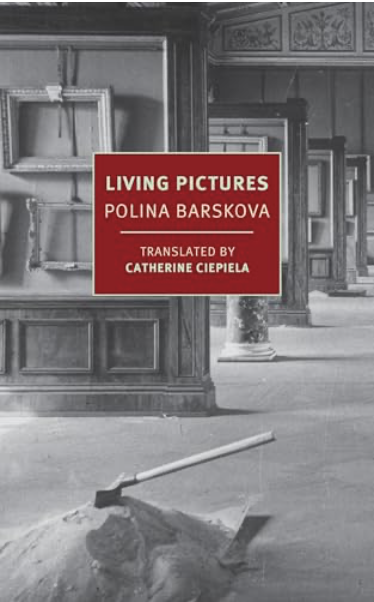
Barskova, a Russian-born poet and scholar, writes from a place of personal and intellectual obsession with the siege of Leningrad, the devastating, nearly 900-day military blockade during WWII that has loomed large in the Russian imagination for nearly a century. This book is a novel, or a series of stories, or a memoir, or a work of criticism with forays into historical fiction — it’s all of these things — and it’s about the afterlife of individual and collective trauma: sites of private and public memory, as well as the innumerable acts of manipulation, repression, and forgetting (carried out by the state or our own internal shaming mechanisms) that make fraught histories of bad things somewhat hidden. (To even say that acts of forgetting are "carried out" is in many ways an overstatement. It's more like new versions of history, driven by new exigencies, have replaced them. Barskova offers examples from her own life, and the siege of Leningrad is another example: it has been both memorialized and sanitized. Papered over.)
This is not a facile book about an authoritative Russian government acting upon individuals — the kind Western audiences typically eat up. It’s a rich, provocative, sprawling, difficult, kooky, deeply sad work of art that makes partial attempts to answer a question that might be something like where does past suffering live? You have to be up for this one, but if you are, it will reward you. The prose is beautiful, and the translation, by Catherine Ciepela, lands like an act of sorcery.
—Nina Renata-Aron/ Reviewed January 2020
September 6, 2022 / NYRB Classics /
192 PAGES